
You’ve probably seen both spellings—dysregulation and disregulation—and wondered which one is actually correct. If you’re confused about dysregulation vs disregulation, you’re not alone. These two terms look similar, sound alike, and are often mixed up, especially in mental health and scientific discussions. In this guide, we’ll break down the real difference, explain the correct usage, and help you avoid common mistakes.
Dysregulation vs Disregulation: What’s the Difference?
Let’s clear this up right away.
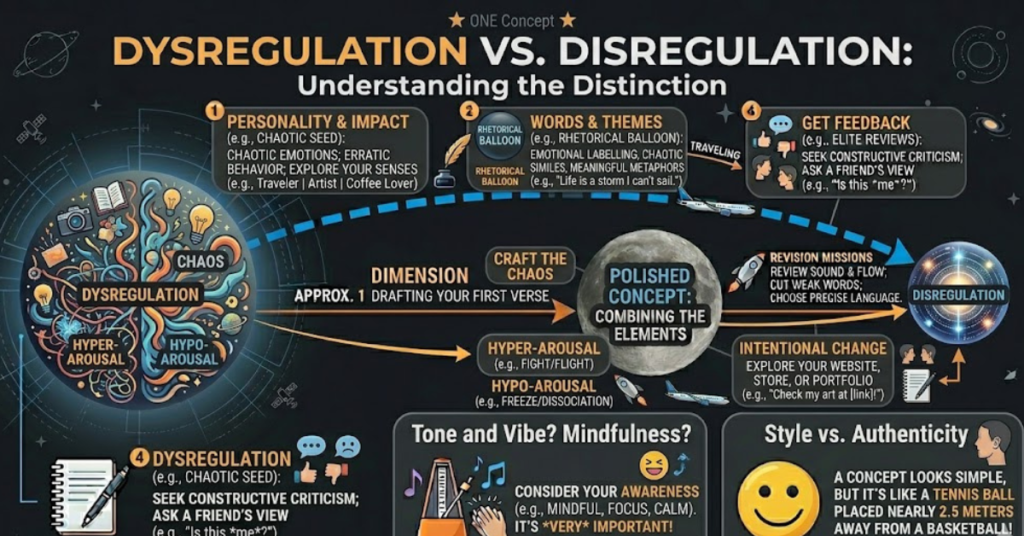
- Dysregulation is a real, widely used term.
- Disregulation is generally considered incorrect or a misspelling.
In simple terms:
- Dysregulation = improper or impaired regulation
- Disregulation = not a standard or accepted word
This confusion usually comes from how similar the prefixes “dys-” and “dis-” sound.
What Does Dysregulation Mean?
Dysregulation refers to a failure or difficulty in regulating processes in the body or mind.
It is commonly used in:
- Psychology
- Medicine
- Neuroscience
Examples of dysregulation:
- Emotional dysregulation (difficulty managing emotions)
- Hormonal dysregulation (imbalance in hormone levels)
- Nervous system dysregulation
The prefix “dys-” means abnormal, impaired, or difficult.
Why Do People Say “Disregulation”?
The word disregulation often appears due to confusion with the prefix “dis-”, which usually means “not” or “opposite of.”
Common reasons for the mistake:
- Similar pronunciation
- Assumption that “dis-” fits all negative words
- Lack of familiarity with scientific terminology
However, in standard English and academic writing, disregulation is not recognized as correct.
Understanding the Prefixes: Dys vs Dis
Knowing the difference between these prefixes can help you avoid errors.
“Dys-” means:
- Difficult
- Impaired
- Abnormal
Examples:
- Dysfunction
- Dyslexia
- Dysregulation
“Dis-” means:
- Not
- Opposite of
- Lack of
Examples:
- Disagree
- Disconnect
- Disapprove
This is why dysregulation vs disregulation is not just a spelling issue—it’s a meaning issue.
Where Is Dysregulation Used?
The term is especially important in health and psychology.
Common contexts:
- Mental health (anxiety, mood disorders)
- Brain function and behavior
- Physical systems like hormones or metabolism
For example, emotional dysregulation is often discussed in conditions like anxiety or stress-related disorders.
Why Correct Usage Matters
Using the right word is more important than it seems.
Here’s why:
- Improves clarity in communication
- Maintains credibility in writing
- Avoids confusion in academic or professional settings
Incorrect terms can make your writing appear less reliable.
Quick Comparison Table
| Term | Correct? | Meaning |
| Dysregulation | Yes | Impaired or abnormal regulation |
| Disregulation | No | Incorrect or non-standard word |
Tips to Remember the Difference
- Think of “dys” as “difficulty”
- Associate it with medical or psychological terms
- If you’re writing about imbalance or dysfunction, use dysregulation
A simple trick: if it relates to health or function, “dys-” is usually correct.
FAQs
Is “disregulation” ever correct?
In standard English and academic usage, it is not considered correct. “Dysregulation” is the proper term.
What does dysregulation mean in psychology?
It refers to difficulty managing emotions, behavior, or mental processes.
Why do people confuse these terms?
Because “dys-” and “dis-” sound similar and both suggest something negative.
Can dysregulation apply to physical health?
Yes, it can refer to issues like hormonal imbalance or nervous system problems.
How can I remember the correct spelling?
Link “dys” with dysfunction or difficulty—it helps reinforce the correct usage.
Conclusion
Understanding dysregulation vs disregulation comes down to one key point: only dysregulation is correct and widely accepted. It describes an imbalance or difficulty in regulation, especially in medical and psychological contexts.
By learning the difference between “dys-” and “dis-,” you not only avoid common mistakes but also improve the clarity and accuracy of your communication. The next time you encounter these terms, you’ll know exactly which one to use—and why it matters.