

Ever wondered how secure your front door really is? In today’s world, understanding door lock security is just as important as locking your door at night. While many people search for terms like “how to pick a lock,” the real concern is usually safety—how to prevent unauthorized entry in the first place.
In this guide, we’ll break down how common locks work, what makes them vulnerable, and most importantly, how you can improve your home security without needing technical expertise.
How Door Locks Work Basic Overview
Before talking about security, it helps to understand the basics. Most household locks—like pin tumbler locks in door knobs—work using a system of internal pins that align when the correct key is inserted.
When the correct key is used:
- Pins align perfectly
- The lock cylinder rotates
- The door opens
When an incorrect key or tampering is attempted:
- Pins stay misaligned
- The lock stays locked
Understanding this mechanism helps explain why better-quality locks are harder to manipulate or bypass.
Common Lock Security Vulnerabilities
Not all locks offer the same level of protection. Lower-quality locks may be more vulnerable due to:
1. Cheap internal components
Weaker materials wear out faster and can be less resistant to tampering.
2. Basic cylinder designs
Older lock models often lack modern anti-tamper features.
3. Poor door installation
Even a strong lock is ineffective if the door frame is weak.
4. Lack of reinforcement
Doors without strike plates or security bolts are easier to force open.
How to Improve Door Lock Security at Home
Instead of worrying about “how locks can be opened,” focus on how to make them stronger and safer.
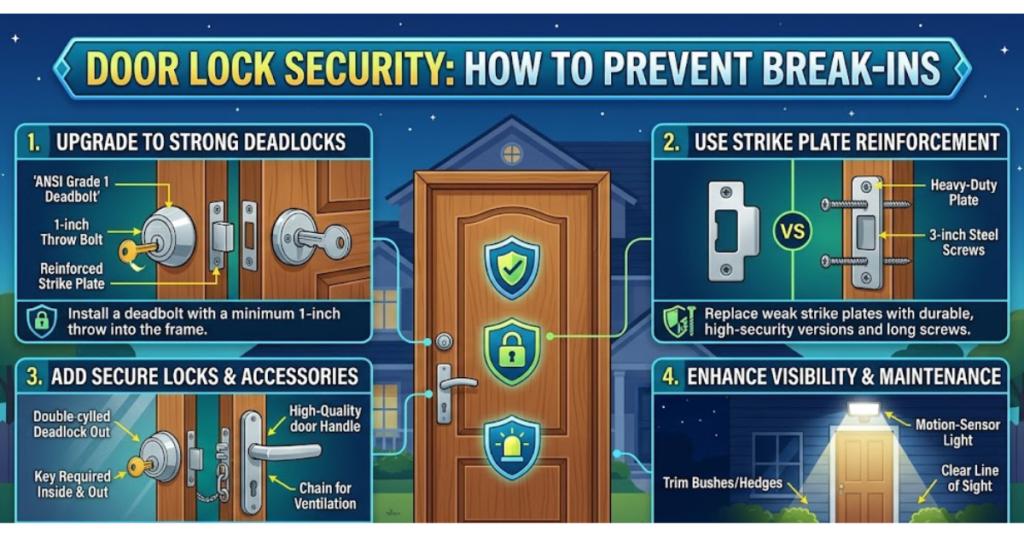
Upgrade to high-security locks
Look for:
- Anti-bump technology
- Anti-drill protection
- Reinforced cylinders
Install a deadbolt lock
Deadbolts provide an extra layer of protection beyond standard knob locks.
Reinforce the door frame
A strong lock is useless on a weak frame. Add:
- Metal strike plates
- Longer screws into wall studs
Use smart locks wisely
Modern smart locks offer:
- Access logs
- Remote locking
- Temporary digital keys
Add secondary security measures
- Door chains
- Security bars
- Motion sensor lighting outside
Why Lock Security Matters More Than “Picking Methods”
Searches like how to pick a lock with a bobby pin or paperclip are often driven by curiosity, but in real life, security awareness is far more valuable.
Improving your home security:
- Reduces break-in risk
- Protects valuables
- Provides peace of mind
- Deters opportunistic intruders
Legal and Ethical Considerations
It’s important to note that tampering with locks you don’t own or have permission to access is illegal in most regions. Locksmith techniques are intended for professional, authorized use only.
If you’re ever locked out of your home or car, the safest option is always:
- Contact a licensed locksmith
- Contact property management (if applicable)
FAQs About Door Lock Security
What is the most secure type of door lock?
High-security deadbolts with anti-drill and anti-bump features are generally considered the safest for residential use.
Can cheap locks be easily broken?
Lower-quality locks are more vulnerable due to weaker materials and simpler internal mechanisms.
How can I tell if my lock is secure?
Check for certification ratings, solid metal construction, and modern anti-tamper features.
Do smart locks make homes safer?
They can improve convenience and monitoring, but should be paired with strong physical locks for best security.
What is the weakest part of a door?
Often the door frame, not the lock itself. Reinforcement is just as important as the lock.
Conclusion
Understanding door lock security is far more useful than focusing on methods of bypassing locks. Most home break-ins happen due to weak hardware, poor installation, or lack of reinforcement—not advanced techniques.
If you want real protection, invest in stronger locks, reinforce your door structure, and consider layered security measures. A well-secured door is your first and most important defense.