
If you’ve ever wondered how hard is dental school, you’re definitely not alone. It’s one of the most searched questions among students considering a career in dentistry—and for good reason. Dental school is known for its intense academics, competitive admissions, and demanding clinical training.
At the same time, many aspiring dentists also ask how hard is dental school to get into, which adds another layer of pressure before the journey even begins. In this guide, we’ll break down both the difficulty of getting in and surviving dental school, while also looking at the personal life values that can help you succeed in such a challenging path.
How Hard Is Dental School Really?
When people ask how hard is dental school, they’re usually trying to understand the workload, stress level, and expectations.
Dental school is widely considered one of the most demanding professional programs. It blends advanced science courses with hands-on clinical practice, often leaving students with packed schedules.
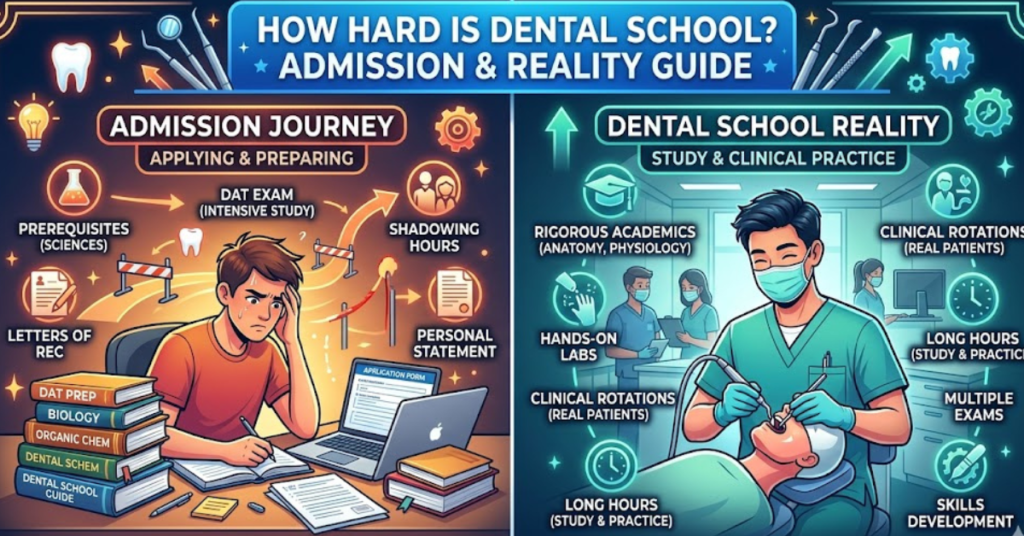
Key challenges include:
- Heavy coursework in anatomy, pathology, and pharmacology
- Constant exams and practical assessments
- Long hours in labs and clinics
- Pressure to develop precision-based clinical skills
- Emotional stress from patient care responsibilities
The difficulty isn’t just academic—it’s also about consistency, discipline, and mental endurance over several years.
How Hard Is Dental School to Get Into?
The question how hard is dental school to get into is just as important as the program itself. Admissions are highly competitive in most countries.
Typical requirements include:
- Strong undergraduate GPA (often 3.5 or higher in competitive schools)
- High score on entrance exams (like the DAT in the U.S.)
- Science-heavy prerequisite courses (biology, chemistry, physics)
- Volunteer or shadowing experience in dental clinics
- Strong recommendation letters and personal statements
Why it’s competitive:
- Limited seats compared to applicants
- Increasing global demand for dentistry programs
- Emphasis on academic excellence + soft skills
So, getting in can be as challenging as the program itself.
Workload and Lifestyle in Dental School
Once admitted, students quickly realize why people keep asking how hard is dental school.
Daily life often includes:
- 6–10 hours of lectures, labs, or clinical practice
- Evening study sessions
- Weekend preparation for exams or practicals
There’s also a steep learning curve when transitioning from theory to patient work. Precision matters, and mistakes carry real consequences.
However, many students find the experience rewarding once they adjust to the rhythm.
Personal Life Values That Help in Dental School
Success in dental school isn’t just about intelligence—it’s also about character and mindset. Here are some core values that make a real difference:
1. Discipline
Staying consistent with study habits is more important than occasional long study sessions.
2. Resilience
You will fail tests, struggle with procedures, and feel overwhelmed. Resilience keeps you moving forward.
3. Empathy
Dentistry is patient-centered. Understanding patient anxiety and needs is essential.
4. Integrity
Ethical decision-making is critical in healthcare professions.
5. Time Management
Balancing lectures, labs, and personal life requires strong organization skills.
These values don’t just help you survive dental school—they shape you into a trusted healthcare professional.
Tips to Succeed in Dental School
If you’re still wondering how hard is dental school, the truth is: it’s tough, but manageable with the right strategy.
Practical tips:
- Study consistently instead of cramming
- Practice clinical skills regularly
- Join study groups for collaboration
- Take care of mental and physical health
- Seek mentorship from senior students or faculty
Small habits build long-term success in this field.
FAQs
1. How hard is dental school compared to medical school?
Both are challenging. Dental school is more skill-focused early on, while medical school is often broader in scope.
2. How hard is dental school to get into for international students?
It is even more competitive due to limited seats and additional licensing requirements.
3. Can an average student get into dental school?
Yes, but strong improvement in academics, test scores, and experience is usually needed.
4. What is the hardest part of dental schools?
Most students say it’s balancing academic pressure with developing precise clinical skills.
5. Is dental schools worth the effort?
For many, yes. It leads to a stable, respected, and well-compensated healthcare career.
Conclusion
So, how hard is dental school really? The answer is simple—it’s challenging, both in getting in and completing it. And how hard is dental schools to get into adds another layer of competition before the journey even begins.
But with strong values like discipline, resilience, and empathy, many students not only survive dental school—they thrive in it. If dentistry is your goal, the difficulty is real, but so is the reward.