
If you’ve ever paused while typing and wondered “is it lieing or lying?”—you’re not alone. This is one of the most common spelling confusions in English grammar.
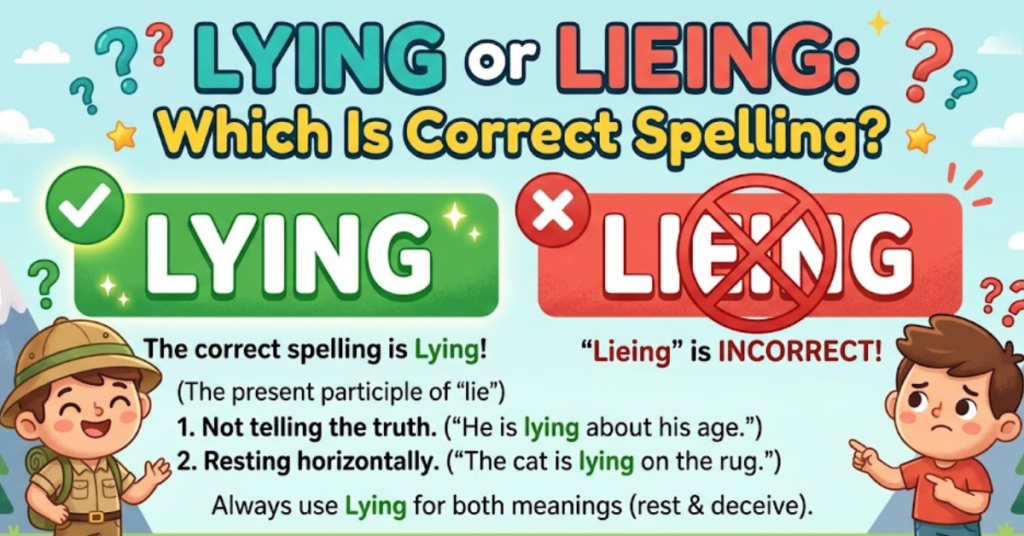
The correct form is “lying”, not “lieing.”
In fact, lieing is considered a spelling mistake in modern English.
In this guide, we’ll break down the correct usage of lying or lieing, explain why the confusion happens, and help you avoid this error in writing once and for all.
What Does “Lying” Mean?
The word lying has two main meanings in English:
1. To tell a false statement
When someone is not telling the truth, they are lying.
- Example: He is lying about where he was last night.
2. To recline or rest in a horizontal position
It can also mean to be in a flat position.
- Example: The book is lying on the table.
So, depending on context, “lying” can refer to dishonesty or position.
Lying or Lieing: Which Is Correct Spelling?
Let’s make this clear:
- Lieing — Incorrect
- Lying — Correct
The confusion usually comes from how English verbs change form.
The base verb is “lie”, and when you add -ing, it does NOT become “lieing.” Instead, it changes to “lying.”
Why “Lieing” Is Incorrect
Many people assume English spelling simply adds “-ing” to the base word. While that works for most verbs (play → playing, try → trying), the verb “lie” follows a special rule.
Here’s why:
The word “lie” ends in a vowel + silent “e.”
In many cases:
- Drop the “e”
- Add “ing”
But “lie” is an exception because it changes form to avoid awkward spelling.
So instead of:
- lie → lieing
It becomes:
- lie → lying
Grammar Rule Behind “Lying”
Understanding the rule makes it easier to remember.
Rule:
For verbs ending in -ie, change -ie → -y + ing
Examples:
- lie → lying
- die → dying
- tie → tying
This is a small but important grammar rule in English spelling.
Common Mistakes With “Lying”
Even native speakers sometimes get confused. Here are some common errors:
1. Mixing up lie and lay
- Lie = to recline (I lie down)
- Lay = to place something (I lay the book down)
2. Misspelling “lying” as “lieing”
- Incorrect: She is lieing on the sofa
- Correct: She is lying on the sofa
3. Overthinking grammar rules
English is full of exceptions, and this is one of them.
How to Remember the Correct Spelling
Here are some simple tricks to avoid mistakes:
Think of “dying” and “lying” together
Both follow the same pattern:
- die → dying
- lie → lying
Drop the “e” mentally
If you see “lie,” just imagine removing extra letters before adding “ing.”
Practice in sentences
Repetition helps your brain lock in the correct spelling.
Why This Confusion Is So Common
The English language is full of irregular verbs, borrowed words, and historical spelling changes. That’s why “lieing or lying” becomes confusing for learners.
Also, spoken English doesn’t clearly show spelling differences, so people often guess when writing.
Real-Life Usage Examples of “Lying”
Here are correct examples to help you understand natural usage:
- He was lying to his parents about school.
- The cat is lying in the sun.
- She felt guilty after lying to her friend.
- The documents were lying on the desk all day.
Notice how “lying” works in both emotional and physical contexts.
LSI Keywords Related to “Lying or Lieing”
To improve understanding and SEO relevance, here are related search terms:
- correct spelling of lying
- lieing spelling mistake
- difference between lie and lay
- grammar rules for lying
- how to spell lying correctly
- English verb spelling rules
FAQs About Lying or Lieing
1. Is it lying or lieing?
The correct spelling is lying. “Lieing” is incorrect.
2. Why do people write lieing?
People often assume English verbs always add “-ing” directly, but “lie” is an exception.
3. What is the rule for lying?
For verbs ending in “-ie,” change “-ie” to “-y” before adding “-ing.”
4. Does lying have more than one meaning?
Yes. It can mean:
- Not telling the truth
- Being in a horizontal position
5. How can I remember the correct spelling?
Remember the pattern: lie → lying (like die → dying).
Conclusion
When it comes to lieing or lying, the correct spelling is always lying. The mistake “lieing” comes from misunderstanding English spelling rules, but once you learn the pattern, it becomes easy to remember.
Whether you’re writing professionally or casually, using the correct form improves clarity and credibility. Just remember: lie → lying, just like die → dying.