
Language can be tricky, especially when small punctuation marks completely change meaning. One common confusion people search for is “yesterdays or yesterday’s”—and it’s a great example of how English grammar can shift depending on possession and plurality.
If you’ve ever paused while writing and wondered is it yesterdays or yesterday’s?, you’re not alone. This article breaks it down in a simple, practical way so you’ll never mix them up again.
Understanding the Keyword: Yesterdays or Yesterday’s
At first glance, “yesterdays” and “yesterday’s” look almost identical, but they serve very different purposes in grammar.
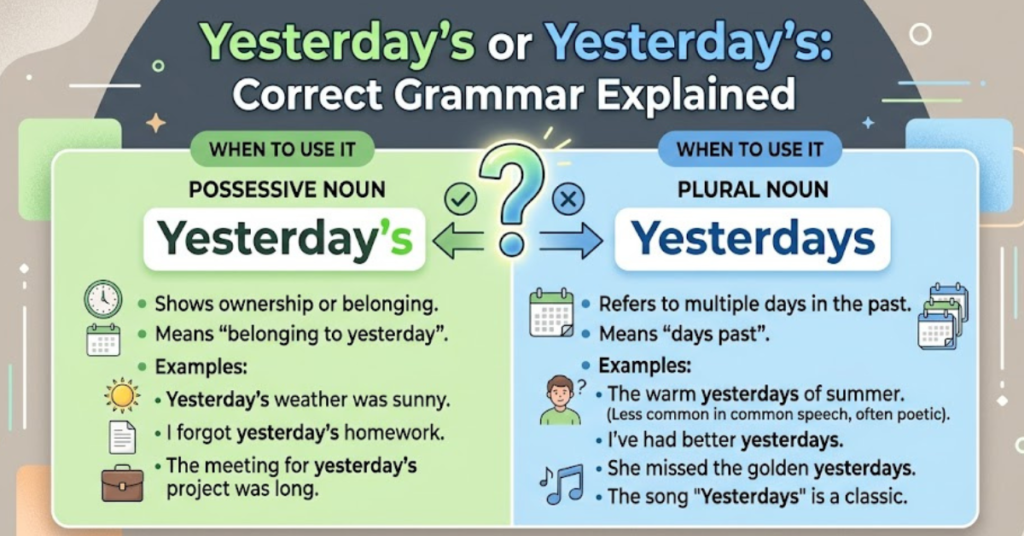
- Yesterdays (without apostrophe) = plural form (rare usage)
- Yesterday’s (with apostrophe) = possessive form (most common and correct in everyday writing)
The confusion usually happens because English speakers try to pluralize a word that normally doesn’t take a plural form.
What Does “Yesterday’s” Mean?
The word “yesterday’s” is a possessive form of yesterday. It refers to something belonging to or associated with yesterday.
Examples of “yesterday’s” in sentences:
- Yesterday’s meeting was cancelled due to rain.
- I still remember yesterday’s conversation.
- Yesterday’s news was shocking.
In all these examples, the apostrophe shows possession—something that belongs to the day before today.
Key takeaway:
If you are referring to events, news, or actions from the previous day, “yesterday’s” is almost always correct.
What About “Yesterdays”?
The word “yesterdays” is grammatically possible but rarely used in modern English. It refers to multiple past days in a poetic or general sense.
Examples of “yesterdays”:
- The yesterdays of childhood feel distant now.
- He reflected on the yesterdays of his life.
This usage is mostly found in literature, poetry, or emotional writing. In everyday communication, it’s uncommon.
Why it feels unusual:
Because “yesterday” is already a specific point in time, it doesn’t naturally form a plural like regular nouns.
Yesterdays or Yesterday’s: Quick Comparison
Here’s a simple breakdown to make it crystal clear:
| Form | Type | Meaning | Usage Frequency |
| Yesterday’s | Possessive | Belonging to yesterday | Very common |
| Yesterdays | Plural (rare) | Multiple past days (poetic) | Rare |
Common Grammar Mistakes People Make
Many writers accidentally mix up yesterdays or yesterday’s due to fast typing or misunderstanding possessives.
Common errors include:
- Yesterdays news was shocking
- Yesterday’ss meeting was long
- I miss yesterdays
Correct versions:
- Yesterday’s news was shocking
- Yesterday’s meeting was long
- I miss yesterday’s moments (if referring to specific events)
Why the Apostrophe Matters in “Yesterday’s”
The apostrophe in yesterday’s is not just decoration—it completely changes meaning.
In English grammar:
- Apostrophe + s = possession
- No apostrophe = plural (sometimes)
Since “yesterday” is an abstract time concept, the possessive form makes more sense than a plural form in most contexts.
When Should You Use “Yesterday’s”?
Use yesterday’s when talking about:
- Events (yesterday’s game)
- News (yesterday’s headlines)
- Experiences (yesterday’s trip)
- Weather (yesterday’s storm)
If you can mentally replace it with “of yesterday,” then yesterday’s is correct.
LSI Keywords Related to Yesterdays or Yesterday’s
To better understand search intent, here are related terms people often look for:
- grammar of yesterday
- possessive apostrophe rules
- yesterday meaning in English
- common grammar mistakes
- English writing tips
- apostrophe usage examples
FAQs About Yesterdays or Yesterday’s
1. Is it yesterdays or yesterday’s in grammar?
The correct form in most cases is yesterday’s, which shows possession. “Yesterdays” is rarely used and mostly found in poetry.
2. Can we use “yesterdays” in English?
Yes, but only in literary or poetic contexts to refer to multiple past days or memories.
3. Why does yesterday’s have an apostrophe?
The apostrophe shows possession—meaning something belongs to yesterday, such as events or news.
4. What is the difference between yesterday and yesterday’s?
- Yesterday = the day before today
- Yesterday’s = something that belongs to that day
5. Is “yesterdays news” correct?
No. The correct form is “yesterday’s news.”
Conclusion: Yesterdays or Yesterday’s Made Simple
Understanding yesterdays or yesterday’s comes down to one simple rule: use yesterday’s when you’re talking about something from the previous day.
While “yesterdays” may appear in poetic writing, it’s not commonly used in modern English communication. If you stick with yesterday’s, you’ll always be grammatically correct in everyday writing.