
Ever found yourself typing a sentence and stopping to ask, “is it molding or moulding?” You’re not alone. This spelling difference shows up everywhere—from home design and carpentry to manufacturing and even personal development.
The truth is, both spellings are correct. But the right choice depends on where you are and who you’re writing for. In this guide, we’ll break down the difference between molding or moulding, explain their meanings, and show you exactly when to use each one.
Molding or Moulding: What’s the Difference?
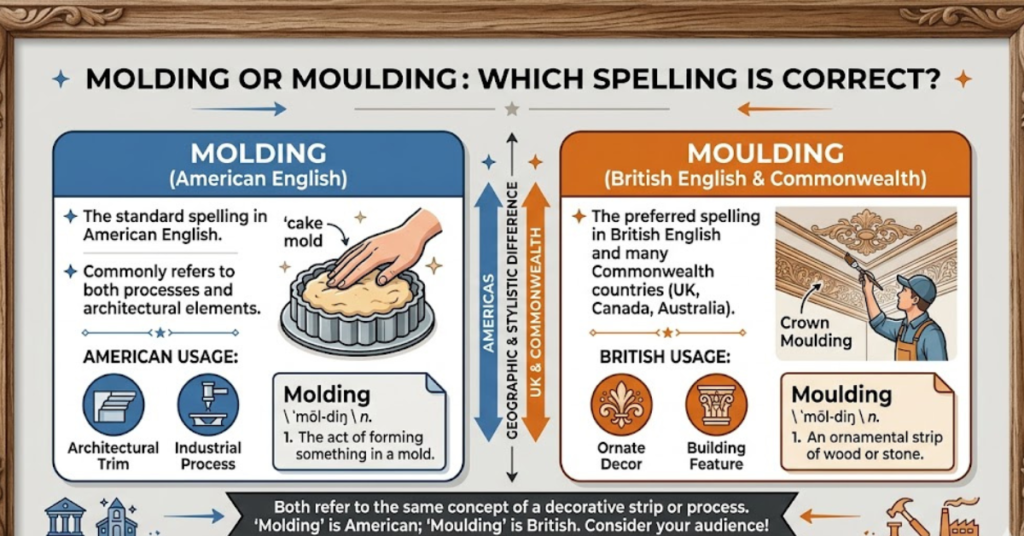
At its core, the difference between these two words is purely regional.
Here’s the simple breakdown:
- Mold: American English
- Mould: British English
Both words mean the same thing and are used in the same contexts. The spelling changes depending on the version of English you follow.
Is It Molding or Moulding?
If you’re wondering, which is correct molding or moulding?, the answer depends on your audience.
Use “molding” if:
- You’re writing in American English
- Your audience is in the United States
Use “moulding” if:
- You’re following British English
- Your audience is in the UK or other Commonwealth countries
So, Both are correct—just in different regions.
Meaning of Molding or Moulding
Understanding these words meaning helps clear up confusion beyond spelling.
As a noun:
It refers to shaped material used for decoration or structure, especially in buildings.
As a verb:
It means shaping something into a particular form.
Crown Molding or Moulding
One of the most common uses of this word appears in interior design.
What is crown molding?
It’s decorative trim installed where walls meet ceilings.
Spelling usage:
- Crown mold: Common in the U.S.
- Crown mould: Used in the UK
If you’re asking, is it crown molding or moulding, the same regional rule applies.
Molding or Moulding in Home Design
You’ll often see this term in construction and interior finishing.
Common types include:
- Floor molding or moulding
- Trim molding or moulding
These elements add detail, protect surfaces, and enhance the overall look of a space.
Molding or Moulding in Manufacturing
The term also plays a big role in industrial processes.
Common applications:
- Injection molding or moulding: Used to create plastic products
- Plastic molding or moulding: Shapes materials into specific forms
These processes are essential in industries like automotive, electronics, and packaging.
Molding or Moulding Clay
In creative and educational settings, the word takes on a more hands-on meaning.
Examples:
- Clay molding or moulding involves shaping soft material into art or objects
- It’s widely used in pottery, sculpture, and crafts
The meaning stays the same regardless of spelling.
Molding or Moulding a Person
Interestingly, the term isn’t just physical—it’s also metaphorical.
When you talk about molding or moulding a person, you’re referring to shaping their character, behavior, or skills over time.
Example:
- Good teachers help in molding young minds.
This usage highlights influence and development rather than physical shaping.
Molding or Moulding UK vs US Usage
If you’re comparing molding or moulding UK usage:
- UK, Australia, and similar regions prefer “moulding”
- The U.S. prefers “molding”
Consistency is key. Mixing both spellings in one piece of writing can look unprofessional.
Tips to Choose the Right Spelling
Still unsure about molding or moulding? Here are some quick tips:
1. Know your audience
Use American or British spelling based on who you’re writing for.
2. Stay consistent
Don’t switch between both forms in the same document.
3. Follow style guides
Professional writing often follows strict regional rules.
Common Mistakes to Avoid
Writers often make small but noticeable errors.
Avoid:
- Assuming one spelling is universally correct
- Ignoring regional preferences
A consistent approach always looks more polished.
Quick Recap: Molding or Moulding
If you’re still asking about these words, here’s the simple answer:
- Both spellings are correct
- “Molding” is American English
- “Moulding” is British English
- The meaning stays the same
Read also <<< “How Should You Pass a Fishing Boat Safely”
FAQs
Is it mold or mould?
Both are correct. “Mold” is used in American English, while “mould” is used in British English.
Which is correct, mold or mould?
Both are correct depending on regional spelling conventions.
Is it crown mold or mould?
In the U.S., it’s “crown molding.” In the UK, it’s “crown moulding.”
What does mold or mould mean?
It refers to shaping material or decorative trim used in construction.
Should I use mold or mould in professional writing?
Use the version that matches your audience’s regional language and stay consistent.
Conclusion
The debate over molding or moulding isn’t about right or wrong—it’s about context. Both spellings are valid, and the difference comes down to regional preference.
Whether you’re writing about home design, manufacturing, or personal growth, choosing the correct spelling for your audience will make your writing clearer and more professional. Stick to one form, stay consistent, and you’ll never have to second-guess it again.