
If you spend any time on the water, you’ve probably asked yourself at least once: how should you pass a fishing boat? It might seem simple at first glance, but the answer involves more than just steering around it. Fishing boats often have limited maneuverability, active gear in the water, and crews focused on their catch—not nearby traffic.
Understanding how should you pass a fishing boat safely is essential for avoiding accidents, respecting maritime rules, and keeping everyone on the water safe. In this guide, we’ll break down international navigation rules, practical passing techniques, and real-world tips every boater should know.
Understanding Fishing Boats and Their Right of Way
Fishing vessels are often considered “restricted in their ability to maneuver” under COLREGS (International Regulations for Preventing Collisions at Sea). This means they may have priority over power-driven boats in many situations.
Why fishing boats require caution:
- They may have nets, lines, or traps extending far behind or sideways
- They can be moving slowly or changing direction unpredictably
- Crew members are often focused on gear, not surrounding traffic
- Equipment in the water can be invisible or hard to detect
Because of these factors, knowing how should you pass a fishing boat becomes a critical boating safety skill.
COLREGS Rules for Passing a Fishing Vessel
The COLREGS provide the global framework for safe navigation. When approaching a fishing boat, a few key rules apply.
Key navigation rules to remember:
- Rule 18: Power-driven vessels must avoid fishing vessels engaged in fishing
- Rule 13: Overtaking vessels must keep clear, regardless of vessel type
- Rule 8: Action taken to avoid collision must be early and obvious
In simple terms: if you are unsure, slow down and give the fishing boat plenty of space.
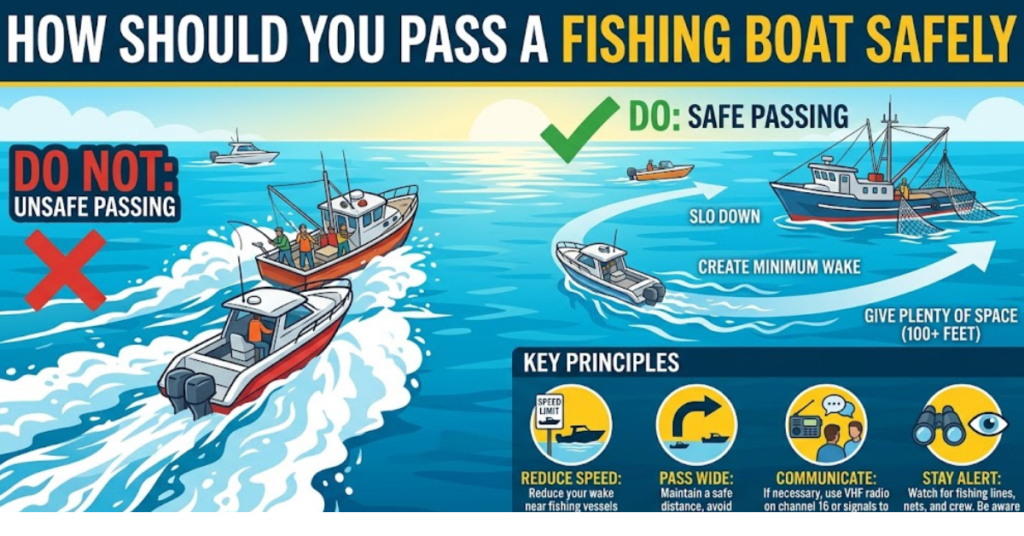
How Should You Pass a Fishing Boat Safely? Step-by-Step Guide
If you’re wondering practically how should you pass a fishing boat, follow this clear step-by-step approach.
1. Identify the fishing activity early
Look for:
- Nets or lines in the water
- Slow movement or drifting
- Fishing rods or deck activity
2. Reduce your speed
Slowing down gives you:
- Better control of your boat
- More reaction time
- Less wake disturbance near the fishing vessel
3. Communicate your intentions
When necessary:
- Use marine VHF radio
- Signal clearly with horn blasts if required
- Make your movements predictable
4. Pass at a safe distance
A good rule of thumb:
- Pass well clear of any visible gear
- Avoid cutting between a fishing boat and its nets
- Increase distance in poor visibility or rough water
5. Maintain a steady course
Do not:
- Zigzag
- Speed up suddenly
- Change direction close to the vessel
Consistency is key when learning how should you pass a fishing boat safely.
Common Mistakes Boaters Make
Even experienced boaters sometimes get it wrong. Here are the most common errors:
Avoid these mistakes:
- Passing too closely to fishing lines or nets
- Ignoring reduced speed requirements
- Assuming the fishing boat sees you
- Cutting across the stern of a fishing vessel
- Creating large wakes that disrupt fishing activity
Small mistakes can quickly turn into serious safety risks.
Extra Safety Tips for Passing Fishing Boats
To improve your boating awareness, keep these extra tips in mind:
- Always scan the water 360° before changing direction
- Use binoculars in open water to spot gear early
- Watch for marker buoys that indicate nets or traps
- In doubt, slow down and widen your passing distance
- Stay especially cautious at dawn and dusk
These habits reinforce proper understanding of how should you pass a fishing boat in real conditions.
FAQs: Passing Fishing Boats
1. Who has the right of way between a fishing boat and a motorboat?
Fishing vessels engaged in active fishing generally have priority over power-driven boats under international rules.
2. Can you pass between a fishing boat and its nets?
No. You should always avoid crossing fishing lines, nets, or gear.
3. How far should you stay from a fishing boat?
There is no fixed distance, but you should pass far enough to avoid gear and wake disturbance—often significantly more than a standard passing distance.
4. What speed should you use when passing?
Slow speed is recommended to maintain control and reduce wake impact.
5. What should you do if unsure about safe passing?
Slow down, increase distance, and give the fishing vessel priority.
Conclusion
So, how should you pass a fishing boat? The answer comes down to three core principles: awareness, patience, and respect for navigation rules. Fishing boats often have restricted movement and active gear in the water, making cautious passing essential.