
There’s nothing quite like biting into a perfectly ripe watermelon on a hot day—sweet, crisp, and incredibly refreshing. But here’s the problem: most people struggle with how to pick a good watermelon, especially when standing in front of a big grocery store pile.
If you’ve ever wondered how to pick a good watermelon at the store, how to pick a good watermelon by tapping, or even searched for a how to pick a good watermelon chart, you’re not alone. The good news? You don’t need to gamble anymore.
This guide breaks down simple, science-backed and experience-tested ways to choose the best watermelon every time—whether you’re shopping at a supermarket, farmer’s market, or roadside stand.
Why Choosing the Right Watermelon Matters
A watermelon doesn’t ripen much after it’s picked. That means what you choose at the store is exactly what you’ll eat at home.
A good watermelon gives you:
- Natural sweetness (no added sugar needed)
- Crisp, juicy texture
- Better hydration and nutrients
- No wasted money on bland fruit
So learning how to pick a good watermelon at the grocery store is actually a small skill that pays off big.
How to Pick a Good Watermelon at the Store Step-by-Step
When you’re standing in front of a pile of watermelons, don’t rush. Use your senses—sight, touch, and even sound.
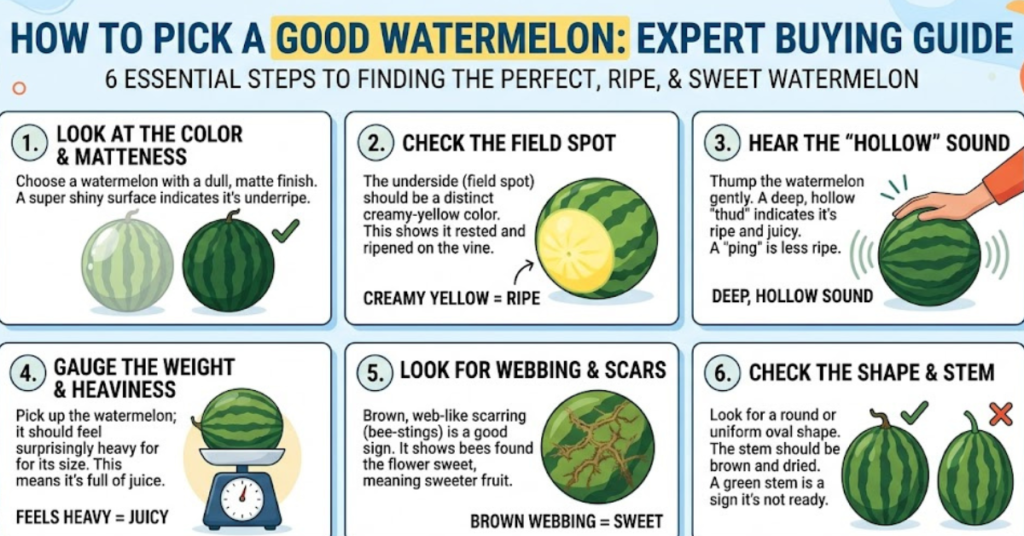
1. Look for the Field Spot The Golden Rule
The field spot is the creamy yellow patch where the watermelon sat on the ground.
- Deep yellow or golden spot = ripe and sweet
- White or very pale spot = under-ripe
- No visible spot = often picked too early
This is one of the most reliable indicators in learning how to pick a good watermelon at the store.
2. Check the Shape
Watermelons should be uniform and symmetrical.
- Round = usually sweeter and better for snacking
- Oval/elongated = sometimes more watery and less sweet
Avoid melons with bumps or irregular shapes—they may have grown unevenly.
3. Inspect the Skin
A good watermelon has a dull, matte finish—not shiny.
Look for:
- Deep green color
- Slight roughness on the surface
- Web-like brown markings (called sugar webbing)
Those webbing marks often mean the bees pollinated it well—more pollination = better sweetness.
4. Pick It Up: Weight Test
A ripe watermelon feels heavier than it looks.
- Heavy = full of water and juice
- Light = likely dry or overripe inside
This is a quick trick many farmers use when deciding how to pick a good watermelon at the grocery store.
How to Pick a Good Watermelon by Tapping
One of the most famous methods is the “tap test,” but it’s often misunderstood.
What to Listen For
Tap the watermelon gently with your knuckles:
- Deep, hollow sound = ripe and juicy
- Dull or flat sound = overripe or underripe
Think of it like knocking on a door—you want a deep echo, not a dead thud.
Pro Tip
Don’t rely on tapping alone. Combine it with field spot and weight for best results.
How to Pick a Good Watermelon Chart Simple Guide
Here’s an easy reference chart you can mentally use while shopping:
| Feature | Good Watermelon | Bad Watermelon |
| Field Spot | Deep yellow | White or none |
| Sound (Tap) | Hollow | Dull |
| Weight | Heavy | Light |
| Skin | Matte, dark green | Shiny or pale |
| Shape | Symmetrical | Uneven or lopsided |
This simple “how to pick a good watermelon chart” can dramatically improve your success rate.
Bonus Tips for Picking the Sweetest Watermelon
1. Look for Sugar Spots
Brown specks or rough patches can indicate sugar seeping out—often a sign of sweetness.
2. Check the Stem
If the stem is still attached:
- Dry and brown = ripe
- Green = picked too early
3. Avoid Soft Spots
Soft or mushy areas usually mean the watermelon is overripe or damaged inside.
Common Mistakes People Make
Even experienced shoppers sometimes get it wrong. Avoid these errors:
- Choosing based only on size (bigger isn’t always better)
- Ignoring the field spot completely
- Relying only on tapping
- Picking shiny watermelons (they’re often underripe)
How to Store Watermelon After Buying
Once you’ve mastered how to pick a good watermelon, storage matters too.
- Whole watermelon: store at room temperature
- Cut watermelon: refrigerate in airtight container
- Best flavor: eat within 3–4 days after cutting
FAQs: How to Pick a Good Watermelon
1. How do I know if a watermelon is sweet?
Look for a deep yellow field spot, heavy weight, and a hollow sound when tapped.
2. Is tapping a watermelon reliable?
Yes, but only when combined with other signs like weight and field spot color.
3. What is the best size watermelon to buy?
Medium-sized watermelons are often the best balance of sweetness and texture.
4. Can watermelons ripen after picking?
No, unlike bananas or mangoes, watermelons do not ripen after harvest.
5. What is the easiest way to pick a good watermelon at the grocery store?
Check the field spot first, lift for weight, and then tap for a hollow sound.
Conclusion
Learning how to pick a good watermelon isn’t about guessing—it’s about observing the right signs. Whether you’re figuring out how to pick a good watermelon at the store, using the tapping method, or following a mental chart, the key is combining all the indicators together.
Once you master these simple techniques, you’ll rarely bring home a bland or disappointing watermelon again. The next time you’re at the grocery store, slow down, trust your senses, and choose like a pro.
If you found this guide helpful, you might also want to explore tips on picking ripe mangoes, strawberries, or other summer fruits for even better fruit-shopping skills.