

If you’ve been tossing and turning at night, you’ve probably searched for which magnesium is best for sleep at least once. And you’re not alone. Magnesium has become one of the most talked-about natural remedies for insomnia, stress, and even digestive issues.
Interestingly, many people also ask which magnesium is best for sleep and constipation, since certain forms can help both relaxation and bowel regularity. So, the real question isn’t just whether magnesium works—it’s which type works best for your specific needs.
Let’s break it down in a simple, practical way.
Why Magnesium Matters for Sleep Quality
Magnesium is an essential mineral involved in over 300 biochemical reactions in the body. When it comes to sleep, it plays a key role in calming the nervous system.
Here’s how it helps:
- Supports GABA production, a neurotransmitter that promotes relaxation
- Helps regulate melatonin, the sleep hormone
- Reduces stress-related cortisol levels
- Relaxes muscles and nerves before bedtime
Low magnesium levels are often linked with insomnia, restless sleep, and anxiety, which is why supplementation can make a noticeable difference.
Best Types of Magnesium for Sleep
Not all magnesium supplements are the same. Some are better for relaxation, while others are more focused on digestion or energy.
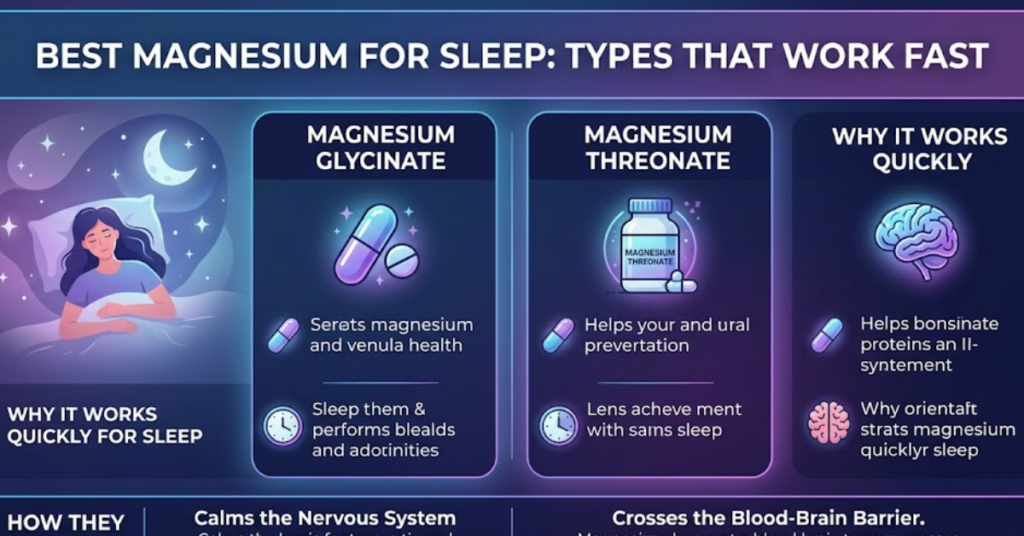
1. Magnesium Glycinate – Best for Sleep and Anxiety
If you’re asking which magnesium is best for sleep, magnesium glycinate is usually the top answer.
Why it stands out:
- Highly absorbable
- Gentle on the stomach
- Contains glycine, which has calming effects
Best for: Insomnia, anxiety, stress, and nighttime relaxation
2. Magnesium Citrate – Best for Sleep and Constipation
This is where the keyword which magnesium is best for sleep and constipation becomes important.
Magnesium citrate:
- Relaxes muscles and supports sleep
- Acts as a natural stool softener
- Commonly used for occasional constipation
Best for: People who struggle with both poor sleep and irregular bowel movements
Note: It may cause loose stools if taken in high doses.
3. Magnesium L-Threonate – Best for Brain and Deep Sleep
This newer form is known for crossing the blood-brain barrier.
Benefits:
- Supports cognitive function
- May improve deep, restorative sleep
- Helps reduce mental overactivity at night
Best for: Brain fog, overthinking, and light sleepers
4. Magnesium Oxide – Least Effective for Sleep
While common and cheap, magnesium oxide is not ideal for sleep.
- Poor absorption
- Mostly used for constipation relief
- Can cause digestive discomfort
Best for: Occasional digestive use, not sleep support
So, Which Magnesium Is Best for Sleep?
If we simplify it:
- Best overall for sleep: Magnesium glycinate
- Best for sleep + constipation: Magnesium citrate
- Best for brain-related sleep issues: Magnesium L-threonate
So, when people ask which magnesium is best for sleep, the answer depends on your body’s needs—but glycinate is usually the safest and most effective starting point.
How to Take Magnesium for Better Sleep
To get the best results, timing and dosage matter.
Tips for use:
- Take 200–400 mg about 1 hour before bed
- Start with a lower dose to assess tolerance
- Combine with a calming bedtime routine (no screens, low light)
- Stay consistent for at least 1–2 weeks
Possible Side Effects
Magnesium is generally safe, but too much can cause:
- Diarrhea (especially citrate or oxide forms)
- Stomach discomfort
- Drowsiness the next morning (rare, usually high doses)
People with kidney issues should consult a healthcare provider before using supplements.
FAQs About Magnesiums and Sleeps
1. Which magnesiums is best for sleeps and anxiety?
Magnesium glycinate is considered the best for both sleeps and anxiety due to its calming effect on the nervous system.
2. Can magnesiums help you fall asleep faster?
Yes. Magnesium helps relax muscles and supports melatonin production, which may help you fall asleep more easily.
3. Which magnesiums is best for sleeps and constipation?
Magnesium citrate is the most commonly recommended option for improving both sleep quality and bowel movements.
4. How long does magnesiums take to work for sleeps?
Some people notice improvements within a few days, but most see better results after 1–2 weeks of consistent use.
5. Can I take magnesium every night?
Yes, most people can safely take magnesium daily, but it’s best to stay within recommended dosages.
Conclusion: Choosing the Right Magnesium for Sleep
Understanding which magnesium is best for sleep comes down to your personal needs. If your main issue is insomnia or stress, magnesium glycinate is the most reliable option. If you also deal with digestive issues, especially constipation, magnesium citrate may be more suitable.
At the end of the day, magnesium works best when paired with healthy sleep habits—consistent bedtime, reduced screen exposure, and stress management.